


Pieces & uses · OrienX Journal
A shared dish, room for each person's taste
The open Tablée serving bowl gives vegetables and legumes room at the centre of the table, while each person chooses and seasons their own serving.
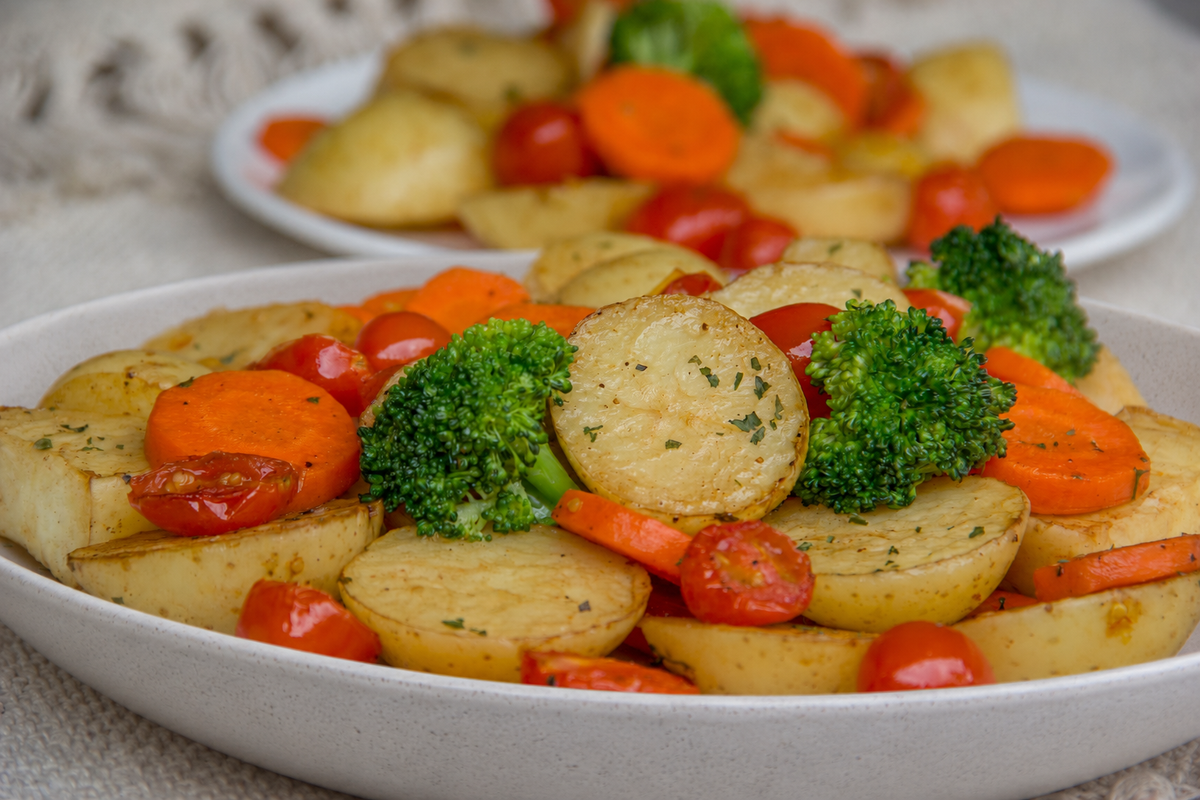
Roasted carrots, white beans and fennel arrive at the centre of the table. One person wants lemon; another prefers the vegetables as they are. The Tablée serving bowl lets everyone see the shared dish before choosing what to take.
A source that makes room for flavour
In the food chapter of Laolao Hengyan, Cao Tingdong discusses using salt sparingly so the food’s own flavour remains perceptible. Written for everyday life in old age during the Qing period, it is not a vegetarian manual. OrienX takes its attention to flavour into a contemporary plant-based meal; the ingredients and serving method are our interpretation.
What the shape makes possible
The roughly 28.5 cm opening and 1.8 litre capacity of Tablée · Grand Low Bowl give cooked vegetables, legumes and a little grain room to spread out. Its low profile keeps them visible at the centre of the table and within reach from several sides. Capacity describes the vessel, not how much anyone should eat.
One dish, several choices
Place roasted carrots, cooked white beans and fennel alongside one another. Serve herbs, lemon or a little dressing separately. Each person takes the combination they want, then chooses whether to season it. If everyone prefers a mixed dish, it can be gently tossed before serving. The vessel makes sharing easier; it does not choose the flavour for the diners.
Explore Tablée · Grand Low Bowl · Read the cultural source in Laolao Hengyan
Read next: Prairie and the small dish
Source: Laolao Hengyan (also Yangsheng Suibi), book I, “Food”. The plant-based meal and vessel use are OrienX’s contemporary interpretation, not a vegetarian rule or health effect stated by the book. Original text.
