


Pieces & uses · OrienX Journal
A place for a small dish: Prairie and its wide rim
The centre of the Prairie hat plate holds a small plant-based dish; its wide rim gives that dish space without defining a serving size.
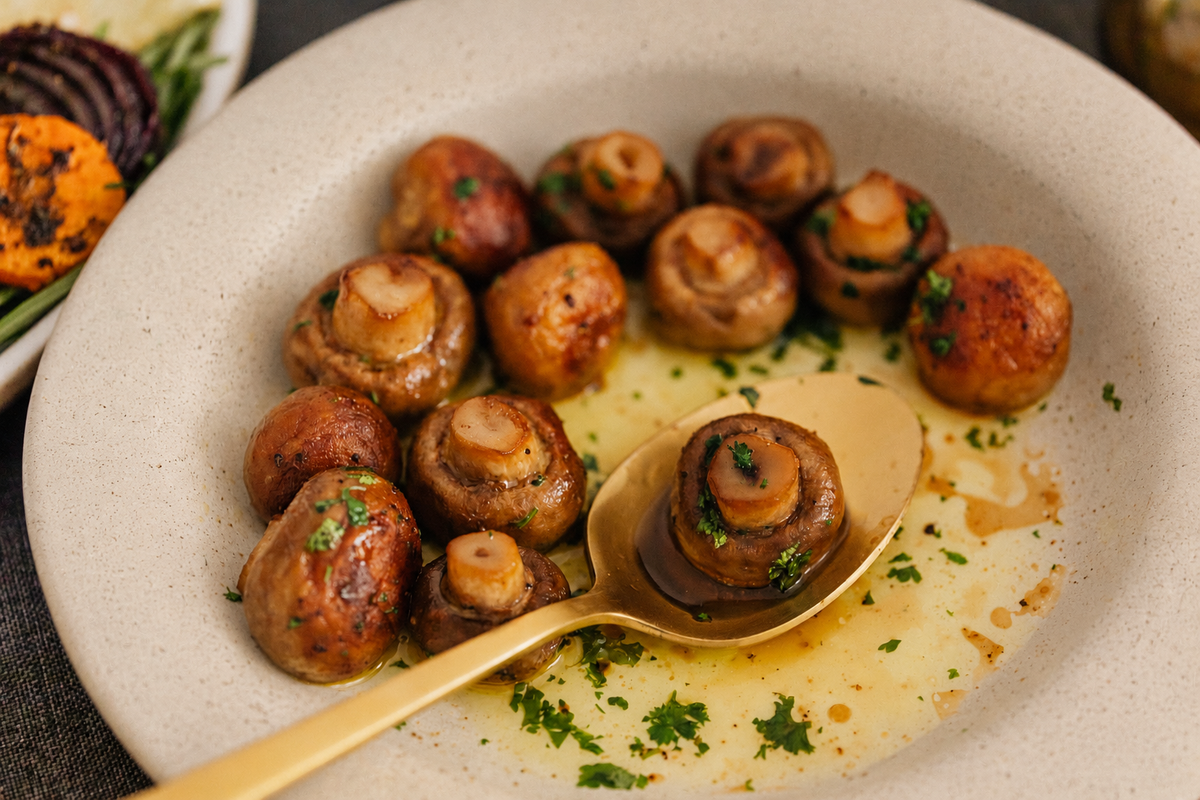
The main meal is already on the table. Where should a few roasted mushrooms and white beans go? Prairie’s central well holds the small dish, while its wide rim gives it a clear place without piling food high.
Who decides how much?
In the food chapter of Laolao Hengyan, Cao Tingdong cites liang fu jie suo shou, a phrase about judging for oneself how much to take. The passage belongs to care in old age; it is not a historical account of this plate’s shape. OrienX retains the diner’s choice without treating the vessel as a portion-control device.
A centre for food, a rim that leaves space
Meadow · Hat Plate measures about 21 cm across, with a central well of about 14.5 cm and a capacity of 310 ml. Roasted mushrooms, a few cooked white beans and herbs can sit in the centre. The broad rim draws the eye back to the food and offers a place to hold the plate. It adds no soup capacity; 310 ml is not a recommended serving size.

Serve, then decide whether to take more
Place a small dish in the centre while grains, vegetables and other foods keep their own places on the table. Anyone who wants more can serve themselves again from the shared dish. The same form can hold a little fruit or dessert. The plate gives one part of the meal a distinct place; the choice stays with the person eating.
Explore Meadow · Hat Plate · Read the cultural source in Laolao Hengyan
Read next: Source and the act of drinking
Source: Laolao Hengyan (also Yangsheng Suibi), book I, “Food”, quoting “量腹节所受”. The serving example is OrienX’s contemporary use; the vessel’s capacity is not dietary guidance. Original text.
